
Knowledge Hub
Complete Guide to Motorcycle & Bicycle Tires
Expert insights on tire selection, maintenance,
and performance for all your riding needs
and performance for all your riding needs
1 Million+
Annual output of motorcycle tires
7 Million+
Annual output of motorcycle tubes
200+
Tire models
MOTORCYCLE TIRES
Complete Guide to Motorcycle Tires
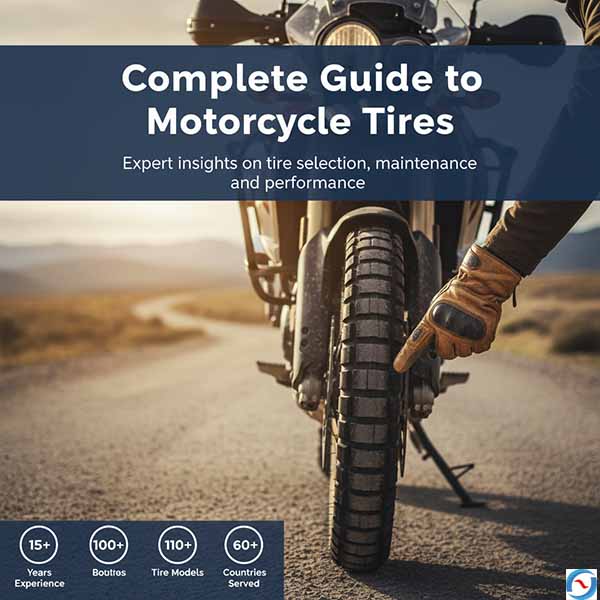
Understanding Motorcycle Tire Types
Motorcycle tires are critical components that directly affect your safety, performance,
and riding experience. At Zenya, we manufacture various types of motorcycle tires
designed for different riding conditions and motorcycle types.
and riding experience. At Zenya, we manufacture various types of motorcycle tires
designed for different riding conditions and motorcycle types.
Designed for paved roads with excellent grip and durability. Perfect for daily commuting and highway riding.
✓ Superior wet weather performance
✓ Long-lasting tread compounds
✓ Optimized for fuel efficiency
Engineered for maximum grip and precision handling on asphalt. Ideal for sport bikes and aggressive street riding.
✓ Advanced soft-compound rubber for superior cornering grip
✓ Optimized tread design for a maximum contact patch
✓ High-speed stability and responsive feedback
The ultimate all-rounder, designed to perform confidently on both paved highways and challenging off-road trails.
✓ Hybrid tread pattern balances on-road smoothness and off-road traction
✓ Durable, chip-resistant compound for mixed-surface longevity
✓ Reinforced carcass for enhanced stability and load-bearing
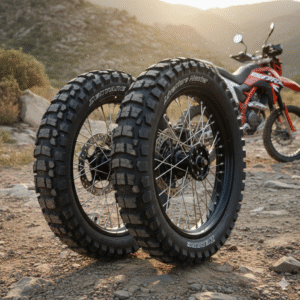
Built to conquer the toughest terrains like dirt, mud, and gravel. The definitive choice for motocross and trail riding.
✓ Aggressive, deep-knob tread for uncompromising grip in loose conditions
✓ High-flex carcass construction for superior impact absorption
✓ Self-cleaning tread design prevents mud and dirt buildup
Specially designed to handle the unique stability and load demands of three-wheeled utility vehicles and cargo trikes.
✓ Heavy-duty construction for high load capacity and durability
✓ Flatter tread profile for enhanced stability and even wear
✓ Puncture-resistant compounds for reliable commercial use
Perfected for the agility and demands of urban mobility. Delivers nimble handling and reliability for city commuting.
✓ Excellent performance in stop-and-go traffic
✓ All-weather tread design for confident grip on wet and dry city streets
✓ Long-lasting compound optimized for urban riding conditions
MOTORCYCLE INNER TUBES
Motorcycle Inner Tubes: Everything You Need to Know
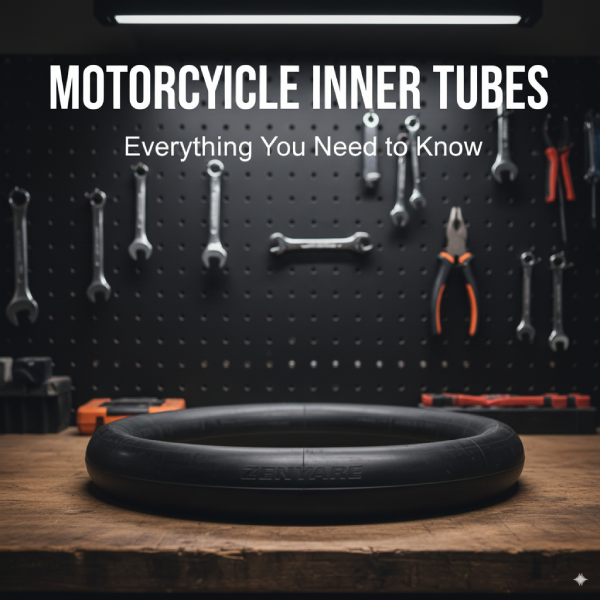
Types of Motorcycle Inner Tubes
Inner tubes are essential for tube-type (TT) motorcycle tires, providing the air chamber that supports the tire structure and maintains proper pressure.
ADVANTAGES:
✓ Heavy-duty construction for high load capacity and durability
✓ Flatter tread profile for enhanced stability and even wear
✓ Puncture-resistant compounds for reliable commercial use
Considerations:
ADVANTAGES:
✓ Excellent air retention, holds pressure longer
✓ Good resistance to ozone and weathering
✓ Lighter weight compared to natural rubber
Considerations:
Valve Types and Applications
TR4 - Standard Straight metal valve
Most common valve type for motorcycles. Suitable for standard wheels and applications.The TR4 is a straight metal valve, typically with threads and two locking nuts. The key function of this design is to prevent the valve from being pulled back into the rim due to tire creep and deformation when the tire is running at low pressure. Suitable for wheel rim holes: Suitable for smaller wheel rim holes with a diameter of about 8 mm.
TR13 - Straight Rubber Valve
The TR13 is one of the most common valve types, featuring a straight rubber stem. It's used in a wide range of applications, from passenger cars and light trucks to motorcycles. Rim Compatibility: Suitable for rims with a diameter of approximately 0.453 inches (11.5 mm).
TR87/JS87: 90-Degree Bent Metal Valve
The TR87 and JS87 are distinctive bent metal valves with a 90-degree bend in the valve stem. This design primarily addresses inflation convenience issues with certain rims or limited installation space. For example, on small wheels or those with complex hub structures, a straight valve may have difficulty reaching the inflation tip. Rim Hole Compatibility: Suitable for rim holes with a diameter of approximately 0.453 inches (11.5 mm).
BICYCLE INNER TUBES
Bicycle Inner Tubes: Complete Guide
Understanding Bicycle Tube Sizes
Bicycle inner tubes come in various sizes to match different wheel and tire combinations. Proper sizing is crucial for optimal performance and safety.
12×2.125
16×1.95/2.125
18×1.95/2.125
20×1.95/2.125
16×1.95/2.125
18×1.95/2.125
20×1.95/2.125
22×1 3/8
24×1 3/8
24×1.95/2.125
26×1 3/8
26×1.95/2.125
24×1 3/8
24×1.95/2.125
26×1 3/8
26×1.95/2.125
27×11/4
28×1 1/4
29×1.95/2.125
700×23/25C
28×1 1/4
29×1.95/2.125
700×23/25C
Valve Types for Bicycles
Schrader Valve (AV)
American valve, similar to car tires. Wide compatibility with pumps and gauges.
Presta Valve (FV)
French valve, narrower design. Common on road bikes and high-pressure applications.
Dunlop Valve (DV)
Woods valve, popular in Asia and Europe. Simple design with good reliability.
MAINTENANCE
Tire & Tube Maintenance Tips
Regular Pressure Checks
Check tire pressure weekly. Proper inflation extends tire life and improves performance.
Visual Inspections
Look for cuts, punctures, or unusual wear patterns before each ride.
Rotation & Replacement
Rotate tires regularly and replace when tread depth reaches wear indicators.
Storage Conditions
Store in cool, dry places away from direct sunlight and chemicals.
Need a Custom Quote?
Get personalized pricing for your tire and tube requirements